Destinations
eSIM for Hong Kong, Macau and China: Which Plan Fits Your Route?
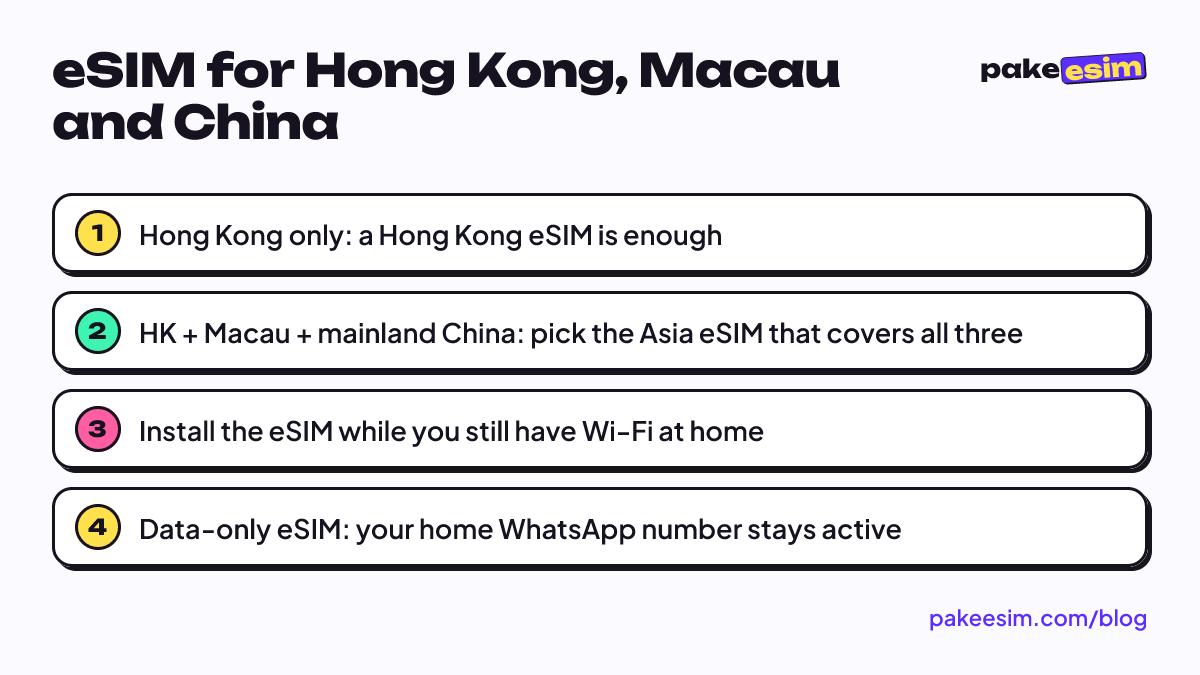
Hong Kong only? A Hong Kong eSIM is enough. Adding Macau or a hop to Shenzhen? Choose an Asia eSIM that covers all three, install it before you fly, and download offline maps for mainland China.
Contents
- Why do Hong Kong, Macau, and China count as different regions?
- eSIM for Hong Kong, Macau and China: which plan fits your route?
- Can a Hong Kong eSIM be used in Macau and China?
- How much data do you need in Hong Kong?
- How to set up your eSIM before you fly
- 1. Make sure your phone supports eSIM
- 2. Buy and install while you re still home
- 3. Activate when you land in Hong Kong
- eSIM, carrier roaming, or a local SIM card?
- Bottom line
If your trip is Hong Kong only, a Hong Kong eSIM is all you need. Once your route stretches to Macau or mainland China (Shenzhen, Guangzhou), pick a regional plan that actually lists all three. That is the whole trick to choosing an eSIM for Hong Kong, Macau and China: the three places run separate mobile networks and different internet rules, so a single-territory plan won't necessarily follow you across the border. In our catalog, the Hong Kong plans are built for Hong Kong, while the Asia eSIM covers Hong Kong, Macau, and China in one profile.
Why do Hong Kong, Macau, and China count as different regions?
On a map they are next-door neighbors: Hong Kong to Macau is a short ferry ride or a bus across the bridge, and Shenzhen is a train ride away. For your phone, though, they are separate places. Each has its own carriers and its own telecom regulator, so moving from Hong Kong to Macau is, network-wise, like crossing into another country.
The second difference is internet access. In mainland China, thousands of domains are blocked by the national censorship system known as the Great Firewall, as the Freedom House Freedom on the Net 2025 report on China notes. An app that works fine in Hong Kong may not open in Shenzhen, so download offline maps and save key documents to your photos before you cross.
The third difference is cost. Hong Kong's telecom regulator, OFCA, warns that mobile data roaming charges are much higher than local data rates and suggests travelers use a prepaid local SIM or a day pass with a charge ceiling. A travel eSIM is basically the digital version of that advice: prepaid, a clear data allowance, and no surprise bill.
eSIM for Hong Kong, Macau and China: which plan fits your route?
An eSIM is a digital SIM card built into your phone. There's no plastic card to swap; you scan a QR code and the data profile installs itself. Because it's a profile, one phone can hold a travel eSIM while your regular SIM keeps handling WhatsApp and OTP texts.
Your best pick depends on where you're going:
| Route | eSIM to choose | Notes |
|---|---|---|
| Hong Kong only (layover, shopping, campus visit) | Hong Kong eSIM | The best fit for a one-city trip |
| Hong Kong + Macau | Asia eSIM | Macau is on the Asia eSIM country list |
| Hong Kong + Macau + Shenzhen/Guangzhou | Asia eSIM | One profile for all three, no swapping at the border |
| Hong Kong + Taiwan | Asia eSIM | Taiwan is also covered by the Asia eSIM |
| Mainland China only | China eSIM | For Beijing, Shanghai, Guangzhou, and other cities |
The Asia eSIM covers 20 countries and territories, including Hong Kong, Macau, China, and Taiwan, so you don't need to install a new profile every time you cross a border. See the details on the Asia eSIM 3 GB / 30 days plan or compare everything in the full plan catalog.
Can a Hong Kong eSIM be used in Macau and China?
Don't assume it can. The Hong Kong plans in our catalog are described for travel to Hong Kong and don't list Macau or mainland China. If you're only popping over to Macau for half a day, some people just get by on Wi-Fi at the hotel, cafés, and the ferry terminal. That works, but you'll be walking around without live maps.
For a route that genuinely crosses all three, it's safer to choose a plan that names all three. Most "why is my eSIM not working" moments right after a border crossing happen because the plan only covers one territory, not because the eSIM is broken.
How much data do you need in Hong Kong?
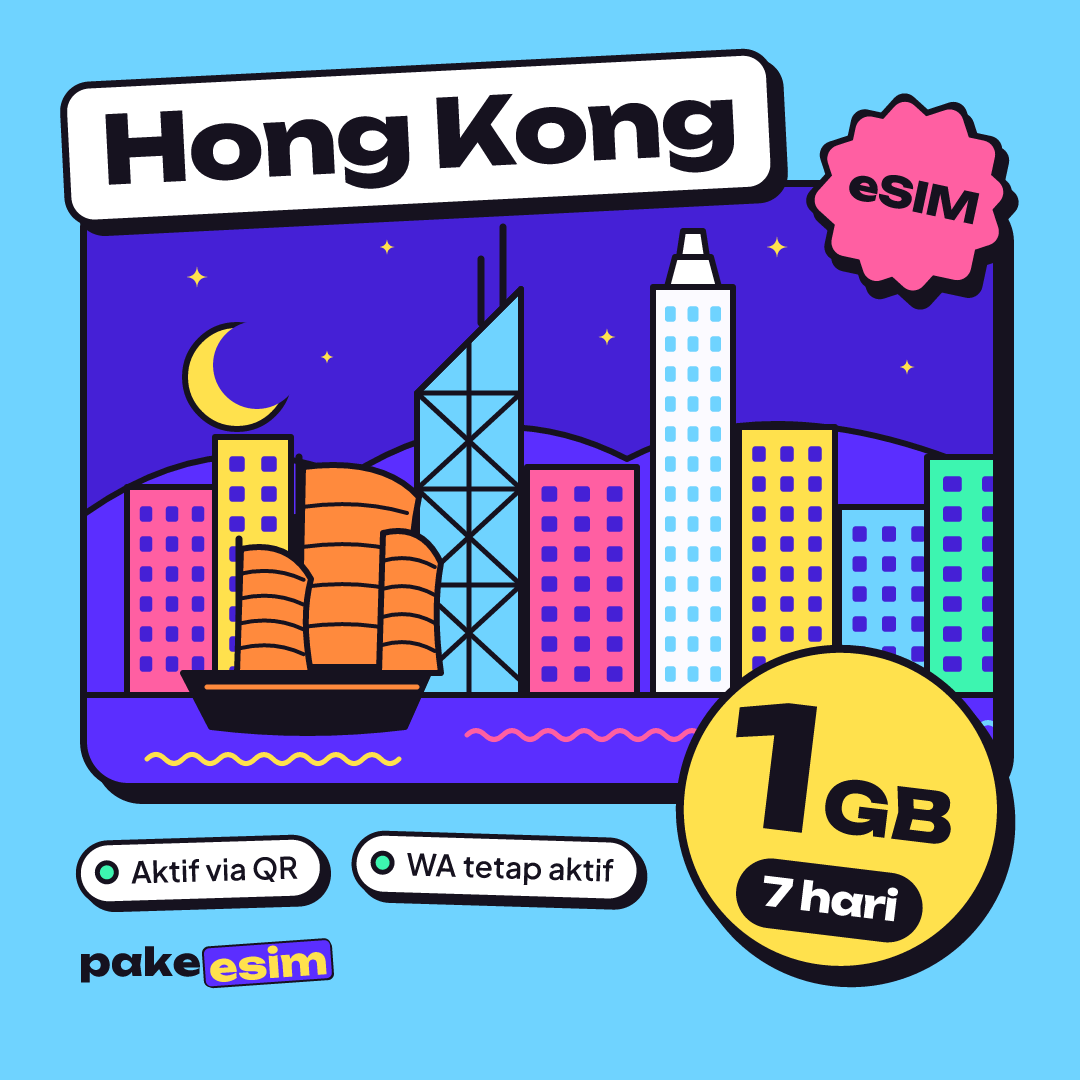
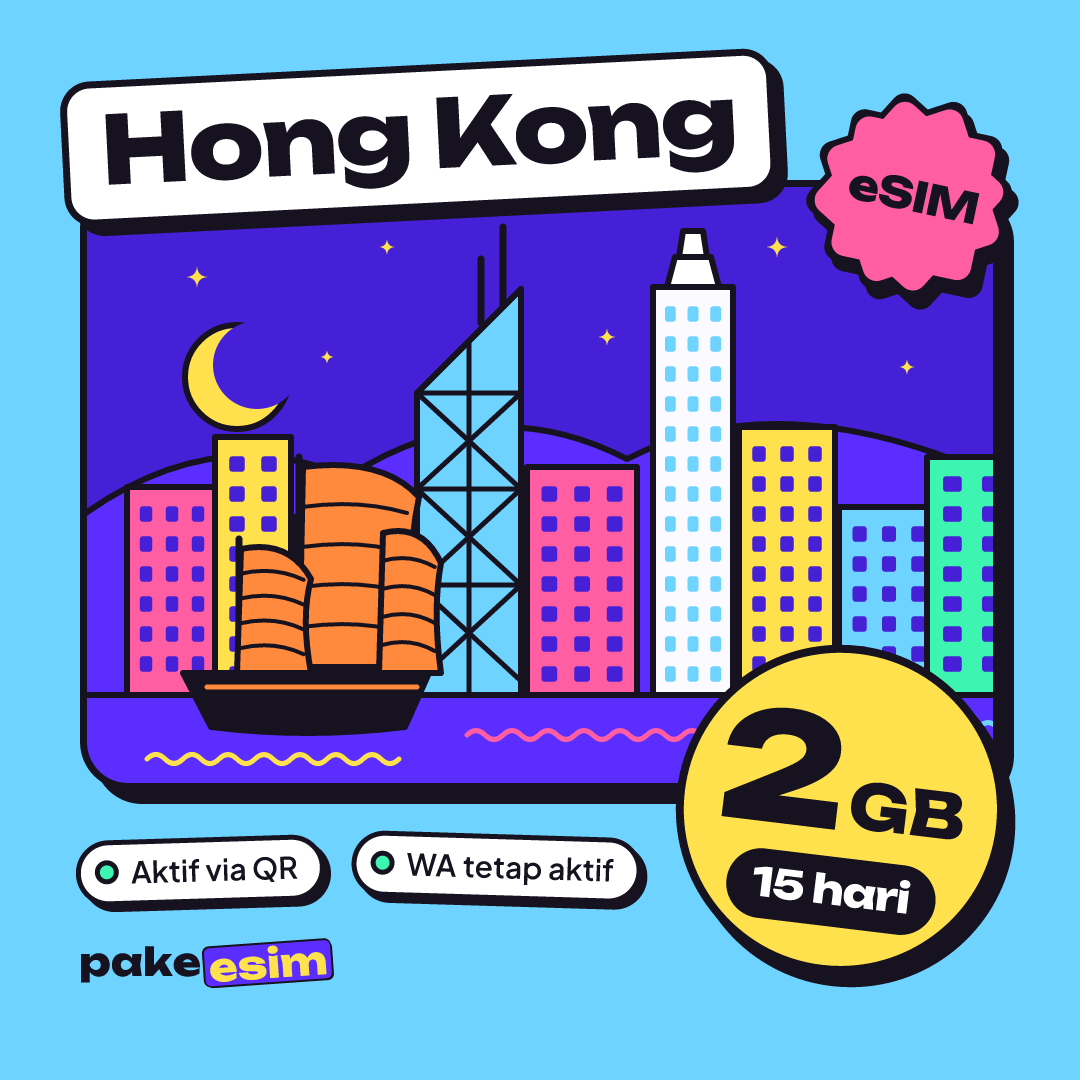
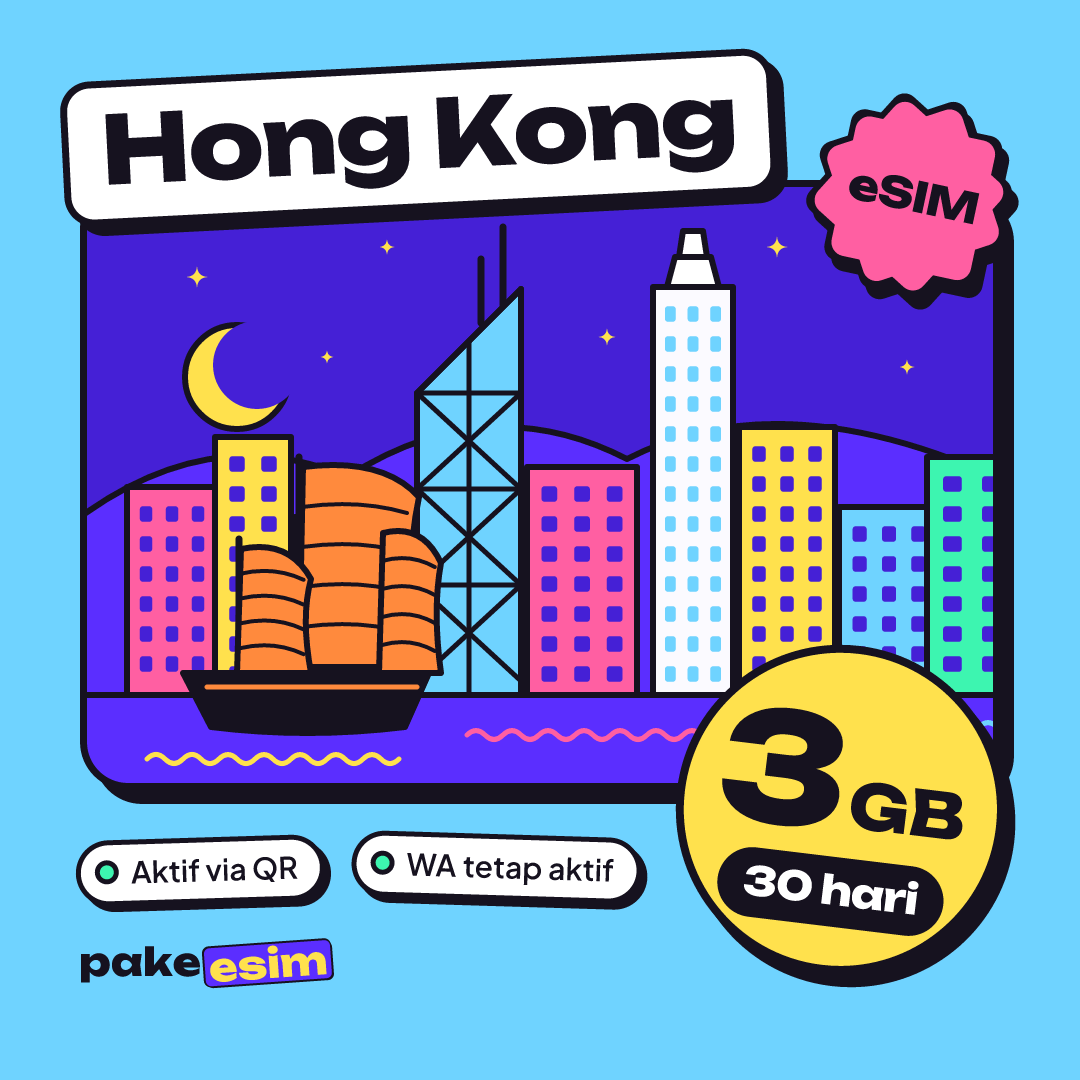
A simple rule of thumb: 1 GB covers roughly one day of maps, chat, and moderate social media. If you video call or stream a lot, double that. Hong Kong plans range from 1 GB for 7 days up to 4 GB for 30 days, so they suit a light-use style that leans on hotel Wi-Fi in the evening.
Some quick examples:
- 1–2 day layover: 1 GB is enough for maps, the MTR, and chat.
- 4–5 day holiday with hotel Wi-Fi: 2 GB, since big photo and video uploads can wait until you're back at the hotel.
- Short course or campus business, 2–4 weeks: 3–4 GB, with campus Wi-Fi as your main connection.
- Heavy use (streaming, laptop hotspot): plan on two packages. Plans can't be topped up; when the data runs out, you buy a new QR code and install it.
Current Hong Kong plan prices (updated automatically from the catalog):
| Plan | Data | Validity | Price | Per day |
|---|---|---|---|---|
| eSIM Hong Kong 1 GB / 7 Days | 1 GB | 7 days | Rp30.000 | ±Rp4.286 |
| eSIM Hong Kong 2 GB / 15 Days | 2 GB | 15 days | Rp50.000 | ±Rp3.333 |
| eSIM Hong Kong 3 GB / 30 Days | 3 GB | 30 days | Rp70.000 | ±Rp2.333 |
| eSIM Hong Kong 4 GB / 30 Days | 4 GB | 30 days | Rp110.000 | ±Rp3.667 |
For a 4–5 day holiday with hotel Wi-Fi, the 2 GB plan is usually a safe middle ground:
If your route is Hong Kong + Macau + China, compare with the Asia eSIM prices below:
| Plan | Data | Validity | Price | Per day |
|---|---|---|---|---|
| eSIM Asia 1 GB / 7 Days | 1 GB | 7 days | Rp30.000 | ±Rp4.286 |
| eSIM Asia 2 GB / 15 Days | 2 GB | 15 days | Rp50.000 | ±Rp3.333 |
| eSIM Asia 3 GB / 30 Days | 3 GB | 30 days | Rp70.000 | ±Rp2.333 |
| eSIM Asia 4 GB / 30 Days | 4 GB | 30 days | Rp110.000 | ±Rp3.667 |
A few small habits can save a surprising amount of data:
- Turn off automatic app updates over mobile data.
- Download offline maps of Hong Kong and Macau before you leave.
- Stop WhatsApp from auto-downloading videos.
- Save big photo and video uploads for hotel Wi-Fi.
How to set up your eSIM before you fly
1. Make sure your phone supports eSIM
First check that your phone has an EID (dial *#06#), shows an Add eSIM option, and isn't carrier-locked. One detail that matters on this route: certain dual nano-SIM iPhones, with model codes CH/A and ZA/A, don't support eSIM. If you're planning to buy an iPhone in Hong Kong and want to use eSIM on it, check the model code before you pay. The full list is on the phone compatibility checker.
2. Buy and install while you're still home
A heads-up if you're not based in Indonesia: payment is by Indonesian bank transfer or QRIS only, in rupiah. The steps are on the how to pay page. Once your payment is confirmed, the QR code appears on your order page and is sent by email. Install it while you're still on Wi-Fi at home, because installing at the destination airport with no internet is a hassle.
On iPhone, go to Settings, then Cellular, and add the plan using the QR code, as described in Apple's eSIM setup guide. Illustrated steps for iPhone and Android are in the eSIM installation guide, and a more detailed iPhone walkthrough is in our article on how to install eSIM on iPhone.
3. Activate when you land in Hong Kong
The validity period starts when the eSIM first connects to a network at your destination, so it's safe to buy a few days before your flight. When you land in Hong Kong, select the eSIM as your mobile data line and turn on Data Roaming for that line. If there's no signal yet, toggle airplane mode on and off once, or pick a network operator manually.
eSIM, carrier roaming, or a local SIM card?
All three are legitimate options; the difference is convenience and how predictable the cost is.
| Travel eSIM | Indonesian carrier roaming | Hong Kong local SIM | |
|---|---|---|---|
| When you set it up | Before you leave | Activate a roaming pack before you leave | Buy it after you arrive |
| Your home number | Stays active on the other line | Stays active | You remove your main SIM (unless your phone is dual SIM) |
| Cost | Prepaid, clear data allowance | Depends on the roaming pack; out-of-pack rates can be steep | Prepaid, local prices |
| Crossing into Macau/China | Depends on plan coverage | Depends on countries in the roaming pack | Usually needs an add-on |
Carrier roaming still makes sense if you need calls and texts on the same number. But if all you need is internet, a data eSIM makes the cost easy to know up front.
Bottom line
For Hong Kong alone, a Hong Kong eSIM does the job. If your route also includes Macau or a hop over to Shenzhen and Guangzhou, go with the Asia eSIM so one profile works in all three. Remember that some foreign services are blocked in mainland China, so have offline maps ready. Check your phone first, install before you fly, then go enjoy your dim sum without hunting for Wi-Fi.