Destinations
Korea eSIM in Winter Time or Summer? December vs July Data and Tips
A South Korea eSIM plan is the same in winter and summer. What differs is usage: from December to February batteries drain fast and you spend more time on indoor Wi-Fi, while from June to August you stay outside longer and burn through data faster.

Contents
- Korea eSIM in winter time or summer: what s the difference?
- Korea eSIM in winter: battery, snow, and year-end holidays
- Korea eSIM in summer: rain, heat, and beaches
- How many GB do you need for a Korea eSIM in winter or summer?
- Korea eSIM, roaming, or a local SIM: which one?
- Does a Korea eSIM in winter work differently from using it in Indonesia?
- Before you fly to Korea
South Korea has four seasons, but a Korea eSIM in winter time or summer is the same plan: the network, the setup, and the price don't change. What changes is how you use your phone. Winter, from December to February, drains batteries fast and keeps you indoors in cafes and guesthouses. Summer, from June to August, means long days, sticky heat, and sudden downpours, so Maps and weather apps stay open all day. Below is a data estimate for each season, plus the plans we think make the most sense.
Key takeaways (TL;DR)
- A South Korea eSIM works the same in winter and summer, because the plan and the network don't depend on the season.
- Winter in South Korea runs from December to February, and Korea's Ministry of Culture puts the average winter temperature between -1.4°C and 2.8°C.
- Apple designs iPhone for ambient temperatures between 0 and 35°C, so outdoors in a Korean winter the battery can drop faster than usual.
- Pakeesim's South Korea eSIM is data only, with no phone number or SMS, and it cannot be topped up.
- The validity period of a Korea eSIM starts when it first connects to a network in South Korea, not when you buy it.
Korea eSIM in winter time or summer: what's the difference?
A South Korea eSIM has no winter version and no summer version. An eSIM is a digital SIM profile you install by scanning a QR code, and the plan you buy for January is exactly the plan you'd buy for July. The difference is in your data habits and your phone's battery life.
Here is a rough season guide, with the Indonesian holidays that often land in the same months.
| Months | Season in South Korea | Indonesian holidays that often overlap | Effect on data and phone |
|---|---|---|---|
| December to February | Winter | Christmas, New Year, odd-semester break | Battery drains fast outdoors, more time indoors on Wi-Fi |
| March to May | Spring | Eid holiday (depends on the year) | Lots of cherry blossom photos, more social media uploads |
| June to August | Hot and humid, with a rainy spell | School break between grades | Frequent weather and Maps checks, phone heats up in the sun |
| September to November | Autumn | Few long holidays, good for seminars or exchange trips | Great walking weather, normal data use |
This article goes live at the end of October, when Korea is in autumn. So if you are only now planning a year-end holiday, the winter version is the one to prepare for.

Korea eSIM in winter: battery, snow, and year-end holidays
Winter in South Korea lasts from December to February, and for anyone coming from Indonesia it is properly cold. Korea's Ministry of Culture, Sports and Tourism reports that the average Korean winter temperature has ranged between minus 1.4°C and 2.8°C since 2012, and Seoul averages about 25 snowy days a year.
"The Siberian anticyclone affects the Korean Peninsula and brings freezing temperatures." (Ministry of Culture, Sports and Tourism Korea)
Cold like that hits your phone directly. Apple says iPhone and iPad are designed for ambient temperatures between 0 and 35°C, and in low temperatures the device may change its behavior to regulate its temperature. In practice, standing in front of Gyeongbokgung at 8 a.m. in January can take a battery from 40% to nearly empty, right when you need Maps.
What to pack for a December to February trip:
- Keep your phone in an inner jacket pocket, not an outer pocket or a thin tote bag.
- Bring a power bank. Top up in cafes or subway stations whenever you spot an outlet.
- Download offline maps of Seoul, Busan, or the route to a Gangwon ski resort before you leave your room.
- Days are shorter and you spend more time indoors. Save video calls and video uploads for the hotel Wi-Fi.
Honestly, we think winter is the most data-friendly season. People hop from cafe to mall to station, and plenty of those places have Wi-Fi. Most of your eSIM data goes to Maps, train schedules, and chatting with your group.
Korea eSIM in summer: rain, heat, and beaches
Summer in South Korea falls between June and August, which lines up with the Indonesian school break. The weather is hot and humid, a lot like Jakarta on a scorching day, and there is usually a rainy spell with heavy rain that can last for days.
Summer data use tends to run higher. Days are longer, you stay out more, and map and weather apps run nonstop. A single day from Haeundae to Gamcheon in Busan means Maps on the bus, beach photos and videos, then hunting for a dinner spot.
Heat has its own risk. Apple notes that using an iPhone in very hot conditions can permanently shorten battery life, so don't leave your phone on a car dashboard or on beach sand at midday. If the phone feels hot, switch off the hotspot and let it rest in the shade.
How many GB do you need for a Korea eSIM in winter or summer?
For 7 to 10 days in South Korea, a 2 GB or 3 GB plan is enough if you use hotel Wi-Fi for video. The store's rule of thumb is that 1 GB covers roughly one day of maps, chat, and moderate social media, and you should double it if you video call or stream often.
That rule holds in both seasons. Summer just tends to push usage up because you're outside longer. Current South Korea plan prices are in the table below (prices are in rupiah and may change).
| Plan | Data | Validity | Price | Per day |
|---|---|---|---|---|
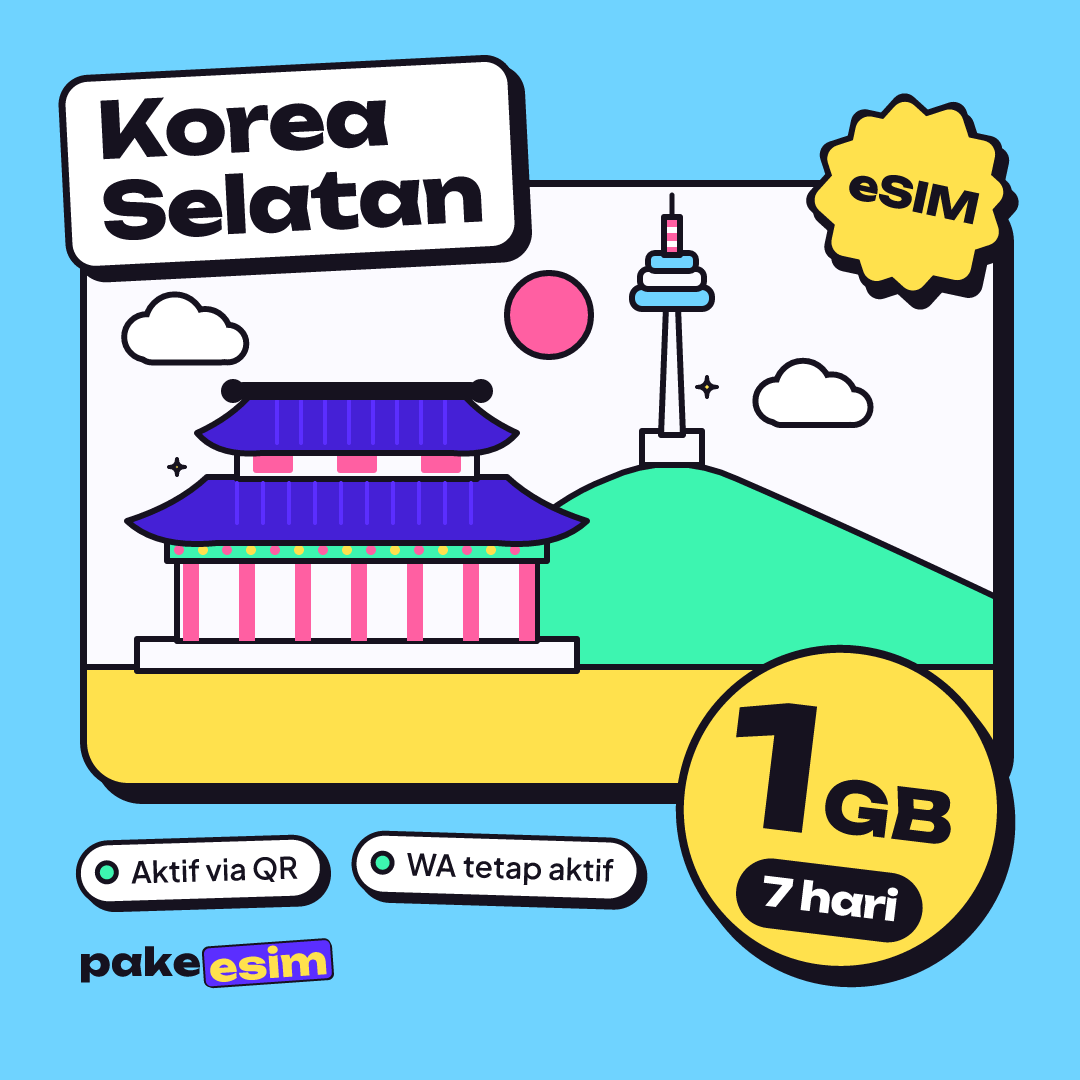
| eSIM South Korea 1 GB / 7 Days | 1 GB | 7 days | Rp17.100 | ±Rp2.443 |
| eSIM South Korea 2 GB / 15 Days | 2 GB | 15 days | Rp28.500 | ±Rp1.900 |
| eSIM South Korea 3 GB / 30 Days | 3 GB | 30 days | Rp39.900 | ±Rp1.330 |
| eSIM South Korea 4 GB / 30 Days | 4 GB | 30 days | Rp62.700 | ±Rp2.090 |
A rough guide by trip type:
- Seminar, conference, or short course, 3 to 7 days. The 1 GB / 7 days plan works if most of your time is on a campus or at a venue with Wi-Fi. We'd call 1 GB too tight if you also go sightseeing every afternoon.
- Year-end holiday, 7 to 14 days (winter). Go with 3 GB / 30 days. Cafe and hotel Wi-Fi help, and 30 days of validity leaves room if your flight home gets pushed back.
- School break, 10 to 14 days (summer). Go with 4 GB / 30 days for the phone that navigates for the whole family. Others can share its hotspot or wait for Wi-Fi.
- Exchange program or a full semester. A 30-day plan can bridge your first month until you sort out a local number there.
eSIM plans cannot be topped up. If you run out of data mid-trip, you'll need to buy a new QR code and install it, which is much easier while you're still on Wi-Fi.
Korea eSIM, roaming, or a local SIM: which one?
For Indonesian travelers spending a few days to two weeks in South Korea, a data eSIM is the most practical choice: you install it before you leave, and your Indonesian number stays active for WhatsApp and bank OTPs. Roaming with an Indonesian operator also works, but check the rates in your operator's app first. A Korean local SIM makes sense if you need a local number for a long stay.
| Option | Pros | Cons |
|---|---|---|
| South Korea eSIM | Installed at home, Indonesian number stays active on the main SIM | Data only, no local number, can't be topped up |
| Telkomsel, XL, or Indosat roaming | Nothing to install, same number | Rates and data depend on the operator's roaming package |
| Korean local SIM | You get a Korean number | Bought after arrival, phone needs a free slot |
If your route also takes in Japan or Taiwan, the Asia eSIM covers 20 countries, South Korea included, in one profile. The Asia eSIM travel guide compares it in detail. For prices, data from Seoul to Jeju, and setup steps, see the complete South Korea tourist eSIM guide.
Does a Korea eSIM in winter work differently from using it in Indonesia?
No, a Korea eSIM works the same way. A Korea eSIM bought in Indonesia is installed by QR code at home and only connects to a network once you are in South Korea. Its validity starts when it first connects to a network there, not when you buy it.
One thing to remember: this Korea eSIM is not for browsing in Indonesia. Install the profile and leave it, but keep using your main SIM until you land at Incheon or Gimhae. For a year-end holiday, order a few days before departure so you're not rushing on your last night.
Before you fly to Korea
eSIM prep is the same for winter and summer, and it's best done in Indonesia. Apple's guide explains that you can set up an eSIM on iPhone by scanning the QR code from your carrier.
- Check that your phone supports eSIM and isn't carrier-locked on the phone compatibility checker.
- Payment is online through Midtrans: bank virtual accounts, QRIS, GoPay, ShopeePay, convenience stores, or credit card. The total is exactly the plan price with no admin fee, and the order is confirmed automatically. See the eSIM payment guide for the steps. Unpaid orders expire after 3 hours.
- Install the eSIM while you're still on home Wi-Fi, using the eSIM installation guide or how to install an eSIM on iPhone.
- After landing, pick the eSIM as your cellular data line and turn on Data Roaming for that line.
Snow on Nami Island in January or the Busan beaches in July, one eSIM does the job. Match the data to the season, then browse all South Korea plans once your travel dates are set.