Destinations
Asia eSIM in Winter or Summer Time: GB for Christmas, Eid, and July
The same Asia eSIM works in winter and summer. July needs a buffer for rain and typhoons, December is busy with Christmas crowds, and hajj needs a Saudi plan because Saudi Arabia isn't covered.

Contents
- Asia eSIM in winter or summer time: which season uses more data?
- December vs July in Asia: what changes for mobile data?
- How many GB does an Asia eSIM need over Christmas?
- Does the Asia eSIM work in Makkah or Madinah for hajj or Eid?
- Asia or Europe eSIM: which one fits your route?
- How to set up an Asia eSIM before peak season
- If your data runs out mid-trip
- So, which one should you pick?
An Asia eSIM works the same in winter or summer time, because the plan itself doesn't change with the weather. What changes is how you use your phone. December in Tokyo or Seoul keeps you indoors on café and hotel WiFi for longer, while July in Hong Kong or Manila brings typhoons and heavy rain, so Maps, weather apps, and group chats run all day. Peak holidays like Christmas and school breaks also crowd the networks around busy spots. So the real question isn't "which season" but "how many days, and how often will you be online on the street".
Key takeaways (TL;DR)
- The same Asia eSIM works in winter and in summer, because its data allowance and validity period do not depend on the weather.
- The Hong Kong Observatory lists July to September as the months when tropical cyclones are most likely to affect Hong Kong.
- According to PAGASA, the Philippines has a rainy season from June to November and a cool dry season from December to February.
- The Asia eSIM covers 20 countries but not Saudi Arabia, so a hajj or umrah trip needs a Saudi Arabia or Middle East plan.
- The Asia eSIM is data only, with no phone number or SMS, and it cannot be topped up once the data runs out.
Asia eSIM in winter or summer time: which season uses more data?
An Asia eSIM usually burns a little more data in summer, especially in countries that are in their rainy or typhoon season. You check the weather radar more, look up detours when a ferry is cancelled, and send more "we're fine" messages home. Winter tends to be lighter on data because a lot of your day happens in malls, cafés, and hotels with WiFi.
The gap isn't dramatic, though. Your habits matter far more than the calendar. A video call home every night will eat through your data much faster than any difference between December and July.

Our help page uses a simple rule of thumb: 1 GB covers roughly one day of maps, chat, and moderate social media. If you video call or stream often, plan for twice that. Honestly, a small plan only makes sense if you're disciplined about saving photo and video uploads for hotel WiFi.
December vs July in Asia: what changes for mobile data?
December and July bring different problems across Asia because the region is huge. The north (Japan, South Korea, China) is cold in December and hot and humid in July, while Southeast Asia is shaped more by rainy and dry seasons than by temperature.
Hong Kong is a clear example. The Hong Kong Observatory's climate overview notes that winter temperatures in the urban area sometimes drop below 10 °C, and its typhoon season sits in the middle of the year:
"July to September are the most likely months with tropical cyclones affecting Hong Kong." (Hong Kong Observatory)
The Philippines follows a different pattern. PAGASA's official explanation of the Philippine climate splits the year into a rainy season from June to November and a dry season from December to May, with a cool stretch from December to February.
| Factor | December to January | June to July |
|---|---|---|
| East Asia (Japan, Korea, Hong Kong) | Cold, lots of indoor time | Hot and humid, Hong Kong enters typhoon season |
| Philippines | Cool dry season per PAGASA | Rainy season per PAGASA |
| What pushes data use up | Christmas lights, city photos and videos | Weather apps, Maps for detours, chat |
| Data advice | Stick to the usual daily estimate | Add a buffer for rainy days and changed plans |
We've written country-specific versions too. See South Korea eSIM data in December vs July, Thailand eSIM data by season, and Hong Kong eSIM during typhoon season.
How many GB does an Asia eSIM need over Christmas?
An Asia eSIM for Christmas and New Year should come with some spare data, because December is peak season. You'll be filming city lights, sharing your location with the group, and booking rides through crowds. For a light 7-day trip, a small plan can be enough if you lean on hotel WiFi.
Current Asia eSIM prices and plans:
| Plan | Data | Validity | Price | Per day |
|---|---|---|---|---|
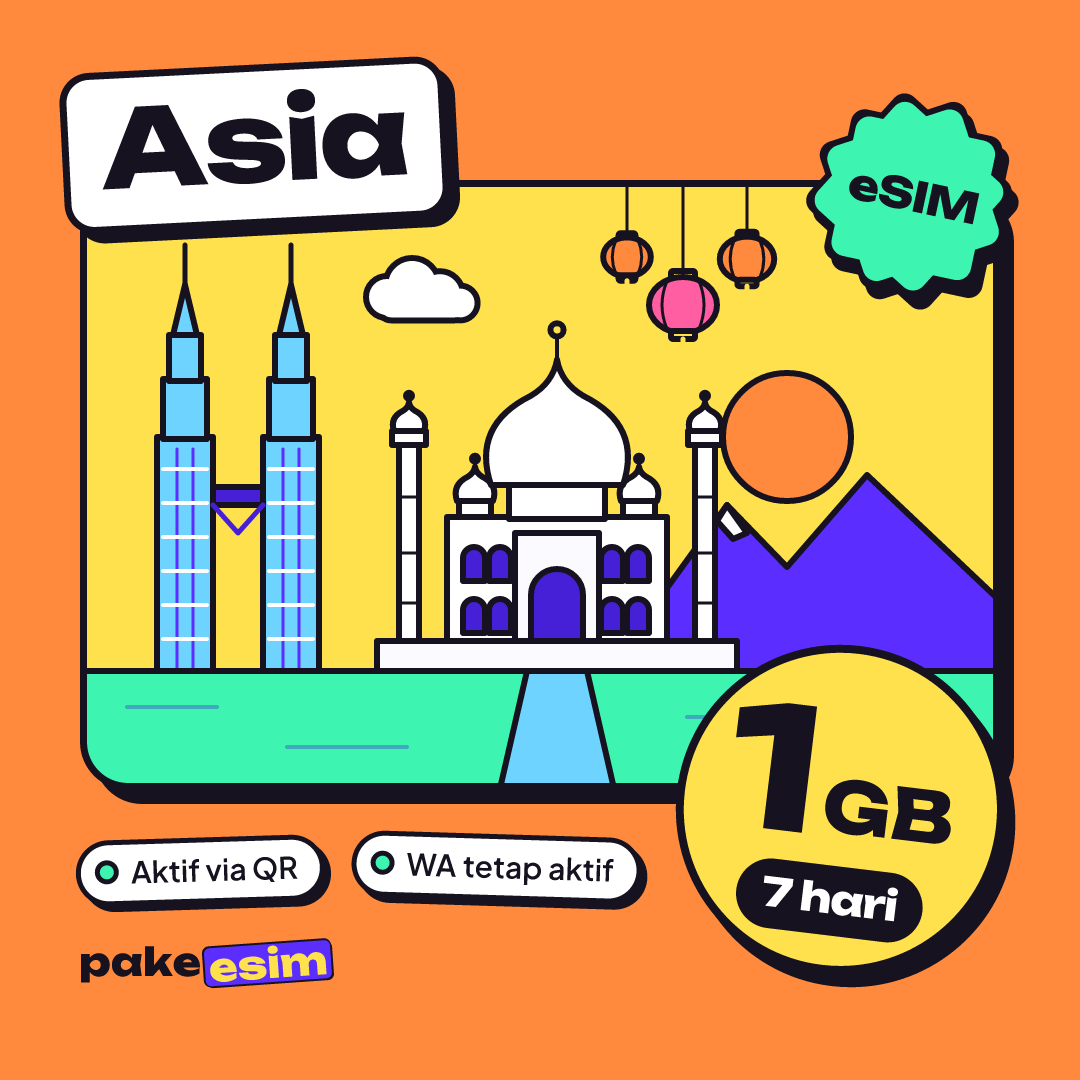
| eSIM Asia 1 GB / 7 Days | 1 GB | 7 days | Rp17.100 | ±Rp2.443 |
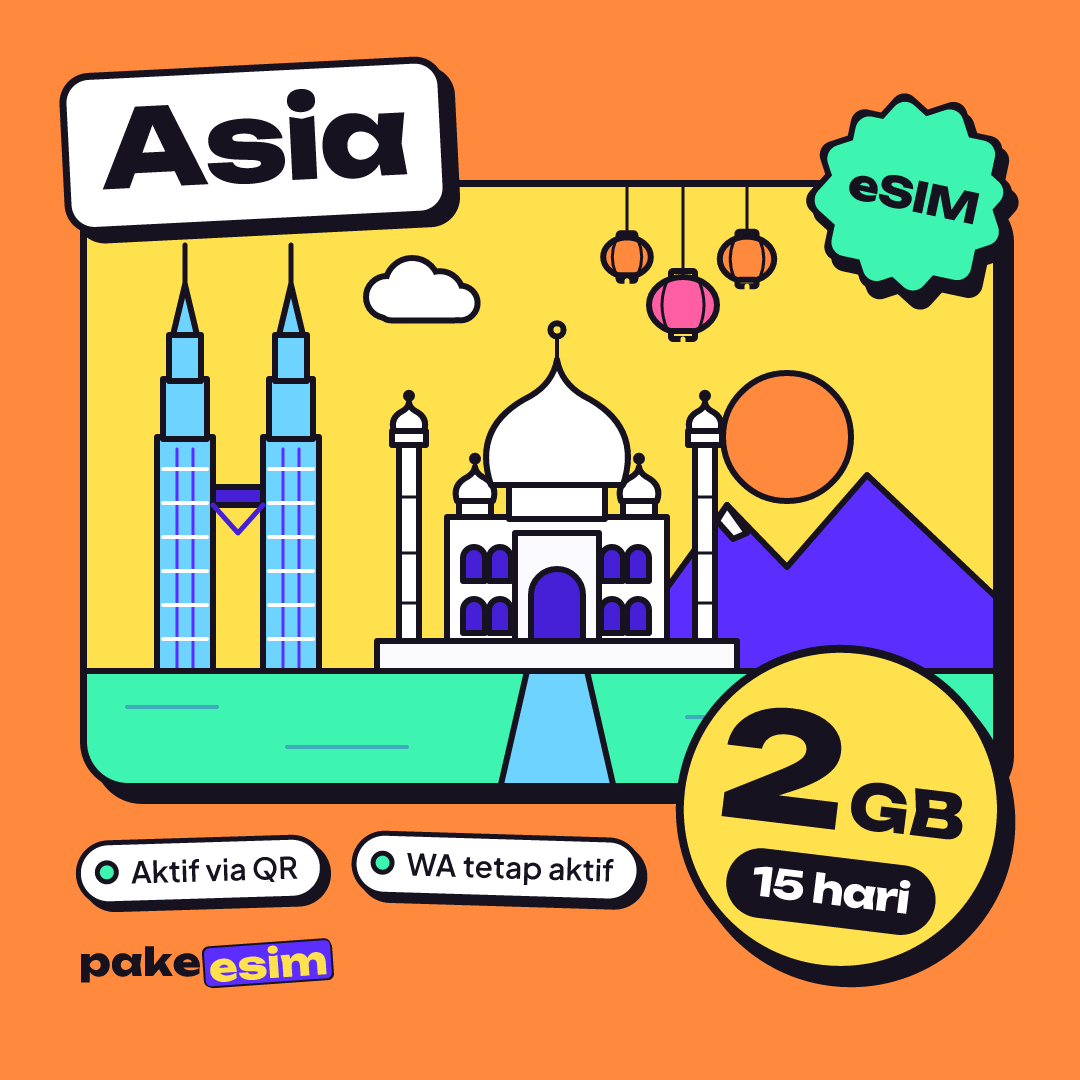
| eSIM Asia 2 GB / 15 Days | 2 GB | 15 days | Rp28.500 | ±Rp1.900 |
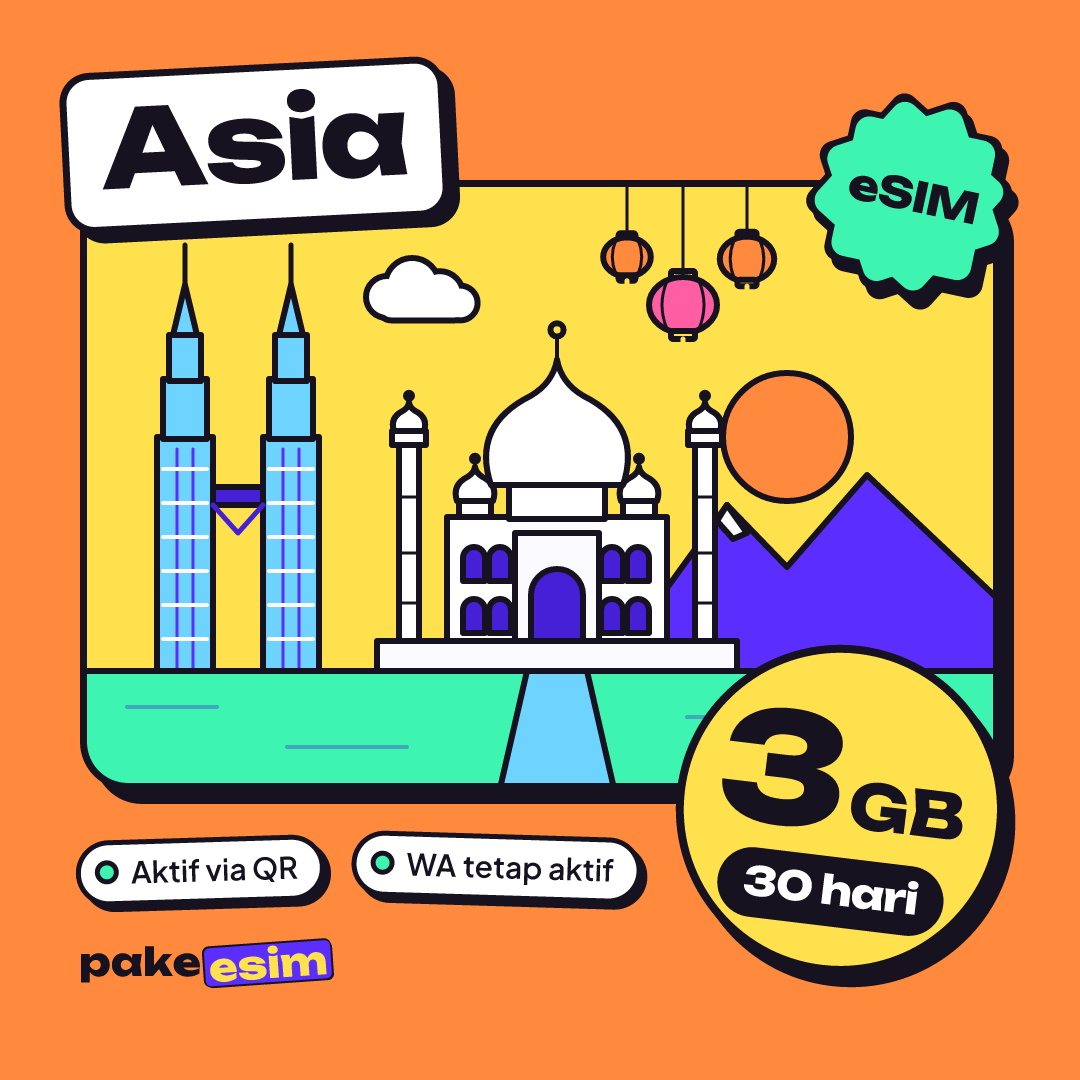
| eSIM Asia 3 GB / 30 Days | 3 GB | 30 days | Rp39.900 | ±Rp1.330 |
| eSIM Asia 4 GB / 30 Days | 4 GB | 30 days | Rp62.700 | ±Rp2.090 |
Here's how we'd honestly choose:
- 5 to 7 days, mostly at the hotel: the 1 GB / 7 days plan handles Maps and chat, as long as heavy uploads wait for WiFi.
- A two-week route, say Seoul then Tokyo: the 2 GB / 15 days plan, since one eSIM profile works in both countries.
- A month around Southeast Asia over the year-end break: the 4 GB / 30 days plan, then buy a second QR code if it runs out.
One thing people forget at Christmas: don't leave the purchase until departure day. The validity period only starts when the eSIM first connects to a network in your destination, so it's safe to buy a few days early and install it at home. Prices are in Indonesian rupiah, and payment is online through Midtrans (bank virtual accounts, QRIS, GoPay, ShopeePay, convenience stores, and credit cards), with the order confirmed automatically once paid, so sort that out before the holiday rush too.
Does the Asia eSIM work in Makkah or Madinah for hajj or Eid?
The Asia eSIM does not work in Makkah or Madinah, because Saudi Arabia isn't one of its 20 covered countries. For hajj, umrah, or an Eid trip to the Holy Land, you need a Saudi Arabia eSIM or a Middle East eSIM. Check that your destination is on the list before you pay.
The Asia eSIM covers Bangladesh, Brunei, Cambodia, China, Hong Kong, India, Japan, Laos, Macau, Malaysia, Nepal, Pakistan, the Philippines, Singapore, South Korea, Sri Lanka, Taiwan, Thailand, Uzbekistan, and Vietnam. Network details and fixes for each country are in our Asia eSIM travel guide for all 20 countries.
If your Eid break is a family holiday to Malaysia, Singapore, or Japan instead, the Asia eSIM is still a good fit. Pilgrims should read Saudi Arabia eSIM data needs by season, or the Middle East eSIM plans for 9 countries if there's a layover in Dubai or Istanbul.
Asia or Europe eSIM: which one fits your route?
The Asia eSIM and the Europe eSIM are two separate regional plans, and one can't stand in for the other. The Asia eSIM works in 20 Asian countries, while the Europe eSIM covers 31 European countries, including the UK and Switzerland. Pick the one that matches the countries you'll actually visit.
The seasons line up more than people expect. December is winter in both Europe and East Asia, so the data math is similar. If your trip goes from Asia to Europe, you can install both eSIMs on a phone that supports it and switch your cellular data line when you change continents. Europe plans are listed in the Europe eSIM catalog.
How to set up an Asia eSIM before peak season
An Asia eSIM is safest to set up a few days before you fly, especially ahead of Christmas, New Year, or the June to July school holidays. A packed airport queue on a congested network is not where you want to be scanning a QR code.
- Check your phone on the eSIM compatibility page. It must support eSIM and must not be carrier-locked.
- Order a plan, then pay online using the available payment methods; the order is confirmed automatically once paid.
- Install the eSIM while you're still on WiFi in Indonesia, following the steps to install eSIM on iPhone and Android.
- When you land, choose the eSIM as your cellular data line and turn on data roaming for that line.
On iPhone, Apple's official guide to setting up eSIM shows which menus to open. Your Indonesian number on the main SIM stays active for WhatsApp and OTP texts, because the eSIM only takes over mobile data.
If your data runs out mid-trip
Asia eSIM plans can't be topped up. Buy a new QR code, install it over hotel WiFi, then switch your data line to the new profile. Delete the old profile once you're sure the new one is connected.
So, which one should you pick?
Winter or summer doesn't change the plan you need. It only changes how often you're online outside. Count your travel days, add a buffer for rainy, typhoon-prone July or crowded December, and make sure every country on your route is actually covered by the Asia eSIM. If it all checks out, install it at home and enjoy the trip.