Imported Phones & IMEI
iPhone Inter vs iBox: Which Is Better? The Price Gap, October 2026
An inter iPhone is cheaper because it usually skips import duty and VAT, has no Apple Indonesia warranty, is often used, and may have an unregistered IMEI. It's genuine, but the cost of going official moves to you.

Contents
- Where the iPhone inter vs iBox price gap comes from
- Unpaid import taxes
- Warranty, distribution, and condition
- Why is an inter iPhone cheaper than one bought in Indonesia?
- How to tell an inter iPhone from iBox by model number
- Is an inter iPhone the same as an HDC phone?
- iPhone inter vs iBox: which is better for you?
- Already have an inter iPhone? Stay online with a roaming eSIM
- Before you send money to a seller
iPhone inter vs iBox, which is better? It depends on what the price gap is actually paying for. An iBox iPhone (sold through Apple's official channel in Indonesia) already includes import duty, VAT, official distribution, and an Apple Indonesia warranty. An "inter" unit, short for international, usually skips the import taxes, comes without a local warranty, and is often secondhand. Both are genuine iPhones. The cost of becoming "official" in Indonesia doesn't disappear with an inter unit. It just moves to you, as IMEI registration, signal problems, or out-of-pocket repairs.
Key takeaways (TL;DR)
- An iBox iPhone already includes import duty, 12% VAT, and an Apple Indonesia warranty, while an inter unit usually skips all three.
- For a USD 1,000 iPhone, total import tax works out to roughly USD 110 after the USD 500 deduction, 10% duty, and 12% VAT.
- Since iPhone 14, US LL/A models have no physical SIM tray and run on eSIM only, per Apple's support page.
- Checking Settings > General > About for a model code like PA/A, ID/A, or LL/A reveals which market an iPhone was originally sold for.
- An inter iPhone with an unregistered IMEI shows No Service on local SIMs, but a roaming eSIM can still provide data under Komdigi's inbound roamer exemption.

Where the iPhone inter vs iBox price gap comes from
An iBox price is the price of a phone whose paperwork is finished. It came in through an official distributor, the taxes are paid, the IMEI is registered, and the warranty is honored in Indonesia. An inter unit takes a shorter route, so several of those costs were never added.
| Cost component | iBox / official iPhone | Inter iPhone |
|---|---|---|
| Import duty and import VAT | Included | Usually unpaid |
| Distribution and official retail | Included | Individual seller or small shop margin |
| Apple Indonesia warranty | Included | None, sometimes a shop warranty |
| Condition | New, sealed | New, used, "like new", ex-contract |
| IMEI status | Registered | Often unregistered |
| Works right away with a Telkomsel, XL, or Indosat SIM | Yes | Only if the IMEI is registered |
So is an inter iPhone ever the same price as iBox? Almost never. For the same model, storage, and condition, the inter unit is nearly always cheaper. The exact difference shifts every week with exchange rates, models, and stock, which is why we deliberately don't publish a price list here. Knowing where the gap comes from stays useful much longer.
Unpaid import taxes
This is the biggest piece. According to the IMEI rules on the Bea Cukai website (Bea Cukai is Indonesia's customs and excise agency), a phone carried in by a passenger gets a USD 500 deduction from its customs value. The rest is charged 10% import duty and 12% VAT, calculated on a base multiplied by 11/12, while income tax is waived (as of October 2026). Registration itself is free.
A quick example with round numbers. Say the iPhone you bring in is worth USD 1,000.
- Taxable value: USD 1,000 minus USD 500, so USD 500.
- Import duty at 10%: USD 50.
- VAT: 12% of (USD 550 × 11/12), which works out to about USD 60.50.
- Total tax: roughly USD 110, then convert at the exchange rate of the day.
Cheap inter units on marketplaces and buy-and-sell groups have usually never gone through this calculation. That's a big part of why they sit so far below the iBox price tag.
Warranty, distribution, and condition
A warranty has a price too. In Apple's limited warranty document, Apple says iPhone warranty service may be restricted to the country where Apple or its authorized distributors originally sold the device. A US unit that breaks in Jakarta may not be covered here. Cracked screen, tired battery: you pay.
Then there's condition. Plenty of inter units are used phones from the US, Japan, or Hong Kong, including ex-carrier contract phones. Used phones lose value much faster than sealed new ones, so it's normal for the number to look "too cheap" next to the iBox shelf.
Why is an inter iPhone cheaper than one bought in Indonesia?
Taxes aside, the base price itself differs by country. Apple sets prices per market, and the Indonesian price already folds in local taxes and distribution costs. In some countries, the shelf price doesn't even include sales tax. Convert that to rupiah and the gap looks huge.
There's also a hardware detail buyers forget. Since iPhone 14, models bought in the United States have no SIM tray at all, per Apple's page on SIM trays. So an LL/A unit from the 14 onward is eSIM only. Some people don't care. For anyone still attached to a physical SIM card, that's a real reason these units sell for less.
If you want the basics on what "inter" means and how it relates to IMEI, start with our guide to international iPhones in Indonesia, iBox, and IMEI registration. This piece sticks to price and how to choose.
How to tell an inter iPhone from iBox by model number
No app needed. Open Settings > General > About, then tap the Model Number row until a code ending in "/A" shows up. The letters before the slash show which market the phone was sold in.
- PA/A or ID/A: sold officially for Indonesia, through iBox or another authorized distributor.
- LL/A: United States.
- J/A, ZA/A, ZP/A, CH/A, and others: overseas markets such as Japan, Hong Kong, Singapore, or mainland China.
The model code only tells you the original market. Even a PA/A listing for a used phone deserves a second look, because what decides whether a local SIM works is the IMEI status. While you're in that menu, check the Carrier Lock row as well. According to Apple's carrier lock guide, "No SIM restrictions" means the iPhone is unlocked.
Is an inter iPhone the same as an HDC phone?
No, and the difference is big. An inter iPhone is a real Apple iPhone sold for a foreign market. "HDC" is the local name for a lookalike phone, usually running Android skinned to resemble iOS. Telling them apart is easy: a real iPhone has the App Store, Settings > General > About shows a serial number, and that serial can be checked on Apple's warranty coverage site. If an "inter iPhone" is priced way below the market, first ask whether it's an iPhone at all.
iPhone inter vs iBox: which is better for you?
There's no single answer. What makes sense depends on who you are and what the phone is for.
| Your situation | Our pick |
|---|---|
| You want a local number, a physical SIM, and a no-fuss warranty | iBox or another official seller |
| You're bringing your own iPhone back from abroad | Inter, then register the IMEI with Bea Cukai on arrival |
| You're buying an inter unit secondhand with an unregistered IMEI | Plan on a roaming eSIM for data, or pick a different unit |
| You're mostly on home or campus Wi-Fi | Inter can still work if the unit is in good shape |
| Tight budget, low appetite for risk | Compare inter plus extra costs against a used official unit |
Our take: an inter iPhone is a good deal once you've worked out the "real price", meaning the unit price plus whatever it costs to use the phone the way you want. If the gap with iBox shrinks to almost nothing after that, the official unit is usually the calmer choice. For the long-term side of things, read whether you need to register an IMEI in Indonesia and the pros and cons of an international iPhone.
One note on IMEI for inter vs iBox phones. An iBox unit's IMEI is already in the official database. An inter unit needs registering, and the Bea Cukai route is designed for passengers bringing their own phone in on arrival. If you buy from someone inside Indonesia, ask for proof of registration and proof of tax payment. No documents? Assume the IMEI is not registered.
Already have an inter iPhone? Stay online with a roaming eSIM
With an unregistered IMEI, an Indonesian SIM ends up showing "No Service". The legal basis is Minister of Communication and Informatics Regulation No. 1 of 2020, published by Komdigi (Indonesia's communications ministry). The same regulation exempts international roaming users (inbound roamers) from IMEI checks, and that exemption is what a roaming eSIM relies on.
A roaming eSIM is a foreign carrier profile you install by scanning a QR code, and it rides on Indonesian networks. Your inter iPhone gets mobile data on the street without touching the IMEI. The limits, plainly: the Pakeesim roaming eSIM is data only, with no phone number, no SMS, and no top-ups. WhatsApp still works over data.
The iPhone has to support eSIM, show "No SIM restrictions", and not be one of the dual nano-SIM CH/A or ZA/A models. Check yours first on the phone compatibility page. For a comparison with Telkomsel, XL, or Indosat eSIMs (which still need a registered IMEI), see the best eSIM for an iPhone in Indonesia.
On data: most inter iPhone owners live on Wi-Fi at home, in a boarding house, or on campus. For chat, Maps, and ride-hailing apps over a month, 3 GB is usually enough if you stick to Wi-Fi when you can. If you only need a week of backup while sorting out the IMEI, 1 GB does the job. Plan prices as of October 2026:
| Plan | Data | Validity | Price | Per day |
|---|---|---|---|---|
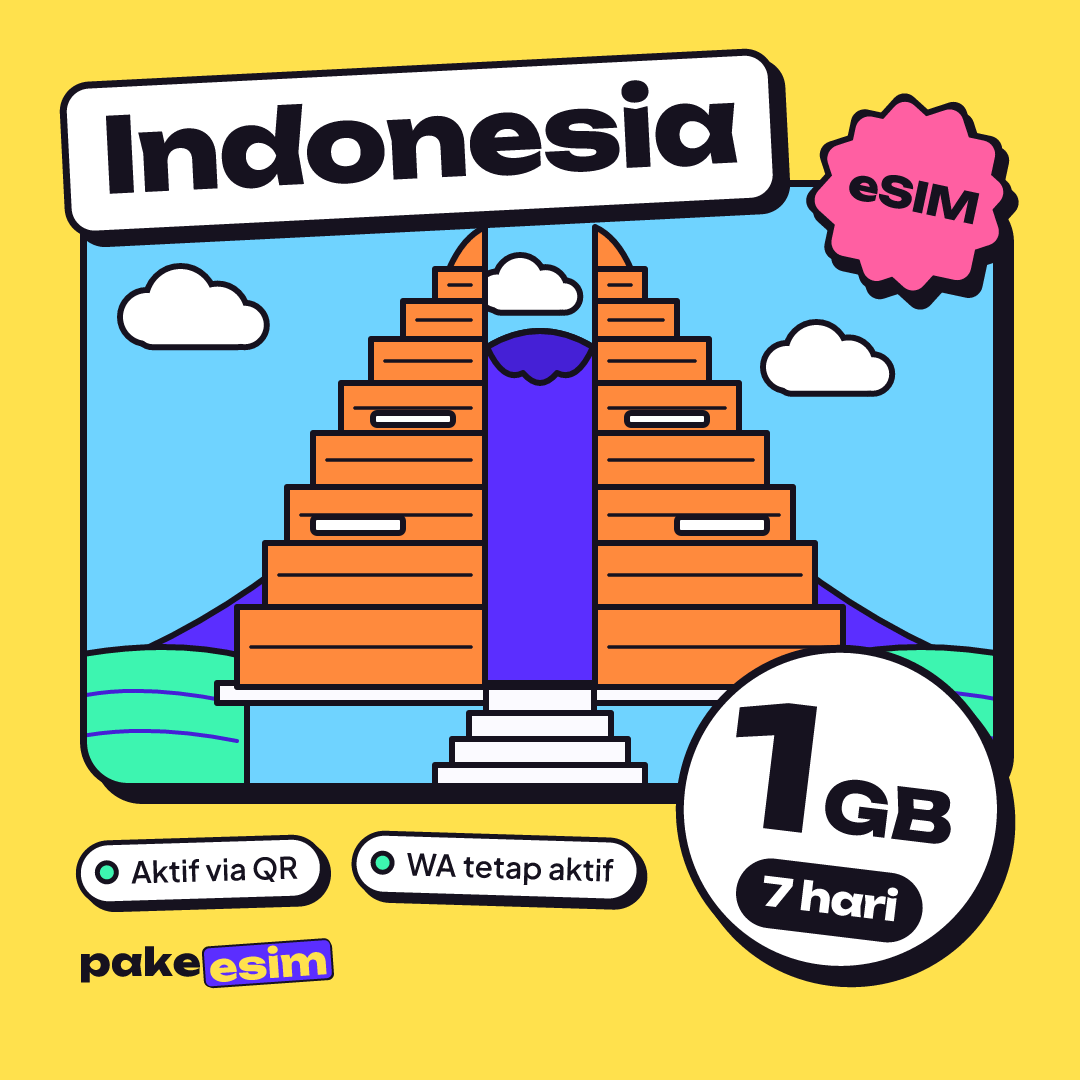
| eSIM Indonesia 1 GB / 7 Days | 1 GB | 7 days | Rp17.100 | ±Rp2.443 |
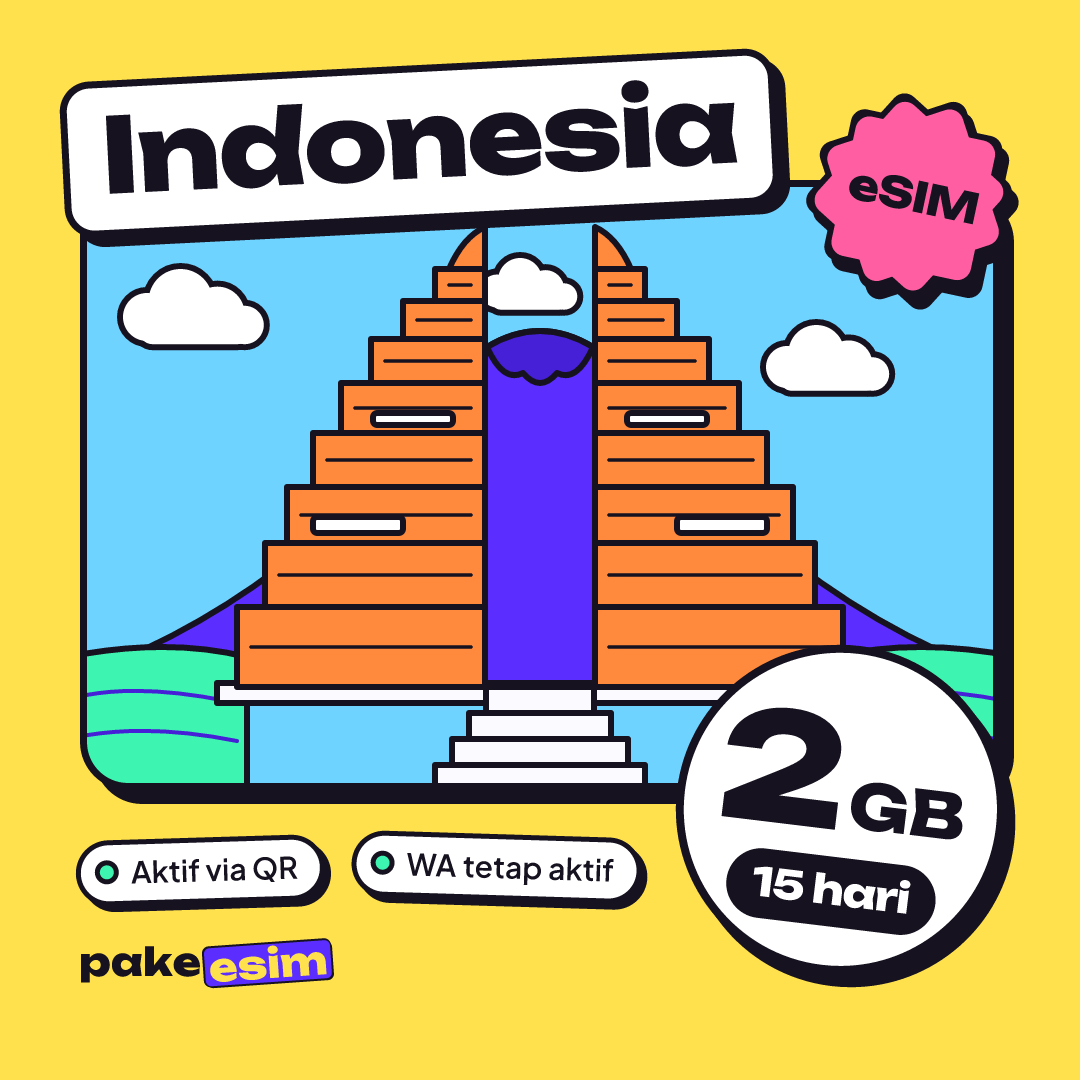
| eSIM Indonesia 2 GB / 15 Days | 2 GB | 15 days | Rp28.500 | ±Rp1.900 |
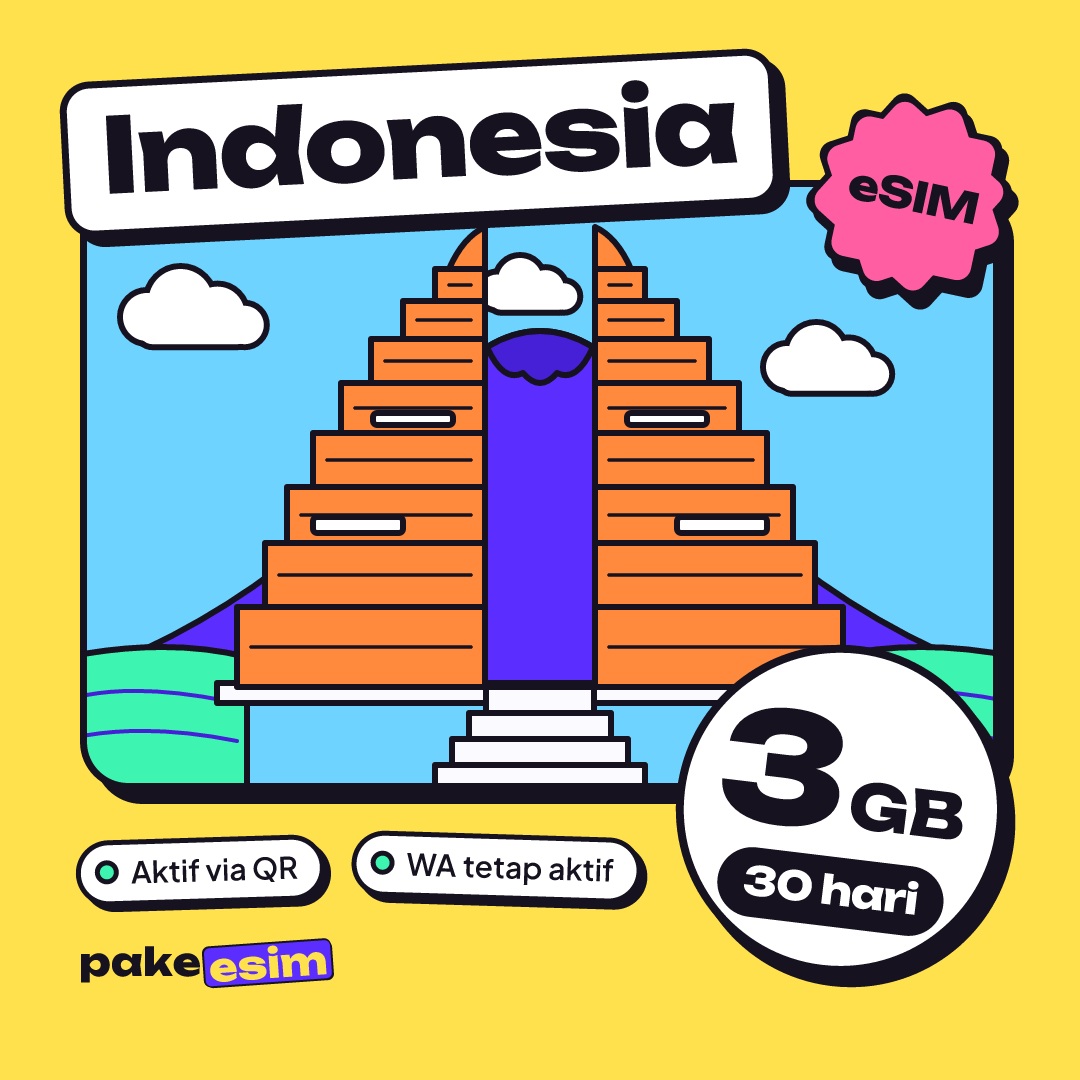
| eSIM Indonesia 3 GB / 30 Days | 3 GB | 30 days | Rp39.900 | ±Rp1.330 |
| eSIM Indonesia 4 GB / 30 Days | 4 GB | 30 days | Rp33.600 | ±Rp1.120 |
For a month of everyday use, this is the most balanced plan:
One thing to know up front: prices are in rupiah, and payment is online by QRIS, e-wallet, virtual account, or card, with the total matching the plan price exactly. Details are on the how to pay page. Once your QR code is issued, follow the eSIM installation guide and turn on Data Roaming for the eSIM line.
Before you send money to a seller
The inter vs iBox price gap is real, but it isn't free money. Before paying, check the model number, check the carrier lock, ask for proof of IMEI registration, and add up what you'd still have to spend. If the math still comes out cheaper, an inter iPhone is a sensible buy.
If the inter iPhone is already in your hand and the local SIM still has no signal, a roaming eSIM can tide you over while you decide what to do next. Check compatibility first, then pick a plan.