Imported Phones & IMEI
iPhone Inter vs iBox Differences: Customs, Camera, Model Codes, and HDC
Same genuine iPhone hardware. The differences are IMEI status, Apple Indonesia warranty, import tax, and home-country features like the camera shutter sound. An iPhone inter registered with Bea Cukai can use local SIMs like an iBox unit.

Contents
- iPhone inter vs iBox differences in one table
- What is the difference between iPhone inter, iBox, and Bea Cukai units?
- What is the camera difference between iPhone inter and iBox?
- What is the difference between iPhone inter, iBox, and HDC?
- How to tell iPhone inter and iBox apart by model code
- Inter or iBox: which one fits you?
- Can you use an eSIM on an iPhone inter with an unregistered IMEI?
- Before you pick inter or iBox
The iPhone inter vs iBox differences have almost nothing to do with the hardware. Both are genuine Apple iPhones with the same chip, camera, and iOS. What differs is how the phone entered Indonesia. An iBox iPhone is sold officially, its IMEI is already registered, and it carries an Apple Indonesia warranty. An "inter" (international) iPhone was bought in a foreign market, so its IMEI status, warranty, and even some camera behavior follow its home country. In between sits the "Bea Cukai inter": a foreign unit whose IMEI has been registered through official channels.
Key takeaways (TL;DR)
- iPhone inter and iBox units are both genuine iPhones; the differences are IMEI status, Apple Indonesia warranty, and price, not the chip or camera quality.
- An iPhone inter whose IMEI is registered through Bea Cukai (Indonesian Customs) can use Telkomsel, Indosat, or XL SIMs like an iBox unit, but its warranty still follows the country of origin.
- IMEI registration at Bea Cukai is free, but 10% import duty and 12% VAT apply to the customs value minus USD 500 for a passenger's personal goods (as of October 2026).
- In some countries and regions the iPhone camera shutter sound cannot be muted, and that limit stays with the unit when it is used in Indonesia.
- An HDC is not an iPhone inter; it is a clone phone made to look like an iPhone and does not run genuine iOS.
iPhone inter vs iBox differences in one table
A fair comparison needs three columns, not two. Plenty of listings say "inter" both for units with a registered IMEI and for units without one, and those two feel completely different in daily use.
| Aspect | iBox iPhone (official) | iPhone inter, IMEI registered with Bea Cukai | iPhone inter, IMEI not registered |
|---|---|---|---|
| Genuine Apple product | Yes | Yes | Yes |
| Telkomsel, Indosat, XL SIM | Works right away | Works after registration | No Service |
| Apple Indonesia warranty | Yes | Follows country of origin | Follows country of origin |
| Import tax | Included in price | Paid by the owner | Usually unpaid |
| SIM slot | Nano-SIM + eSIM | Depends on region code | Depends on region code |
| Camera shutter sound | Can be muted | Follows country of origin | Follows country of origin |
| Price | Highest | Middle | Lowest |
The basics of where the word "inter" comes from are covered in our guide to international iPhones in Indonesia, iBox, and IMEI registration. Here we go aspect by aspect and look at how to choose.
What is the difference between iPhone inter, iBox, and Bea Cukai units?
An iBox iPhone is an official Indonesian unit with its IMEI registered from day one. An iPhone inter is a foreign unit whose IMEI may or may not be registered. A "Bea Cukai iPhone" (often shortened to iPhone BC) is an iPhone inter whose IMEI has been registered and whose taxes have been paid, so local SIM cards work just like on an iBox unit.
Bea Cukai is Indonesia's Directorate General of Customs and Excise, and the rule comes from them. According to the Bea Cukai IMEI registration page, phones, handhelds, and tablets obtained abroad and brought in as passenger baggage or sent as shipments must have their IMEI registered.
Registration itself is free. What you pay is the customs obligation. As of October 2026, a passenger's personal goods get a USD 500 deduction from the customs value, and the remainder is charged 10% import duty and 12% VAT, while income tax (PPh) is exempt. So an iPhone worth USD 900 is taxed on USD 400 only.
Once registered, an iPhone BC and an iBox iPhone can both use Indonesian carrier SIMs. Two differences remain: the warranty and any features tied to the home country. If you buy a unit secondhand, ask for the registration proof and the tax payment receipt. No documents? Assume the IMEI is not registered.
What is the camera difference between iPhone inter and iBox?
For the same model, the iPhone inter and iBox camera use identical sensors, lenses, and photo processing, so the photos come out the same. The only difference you might notice is the shutter sound. Apple notes that in some countries or regions the camera shutter sound can't be muted, and that restriction stays with the unit.
Japanese units (model code J/A) draw the most complaints about this. The "click" plays even with the silent switch on, including when you snap a photo of lecture slides or in a quiet meeting room. Some people shrug it off. If you often take photos in quiet places, we think it is worth weighing before you buy.
If a seller claims an inter unit's camera is "sharper" or "blurrier" than an iBox one, ask for specifics. Differences in photo quality usually come from the condition of a used unit, such as a scratched lens or a replaced camera module, not from the inter or iBox label.
What is the difference between iPhone inter, iBox, and HDC?
iPhone inter and iBox units are both genuine iPhones, while an HDC is a clone phone built to look like an iPhone. An HDC usually runs Android skinned to resemble iOS, so it has no real App Store, gets no iOS updates from Apple, and its serial number does not match Apple's records.
Comparing an HDC with an inter or iBox unit means comparing two different classes of product. An "iPhone inter" priced far below the market, say half the price of a similar used unit, should be suspected as an HDC first. Check the serial number in Settings > General > About, then match it against the box and Apple's warranty check site.
How to tell iPhone inter and iBox apart by model code
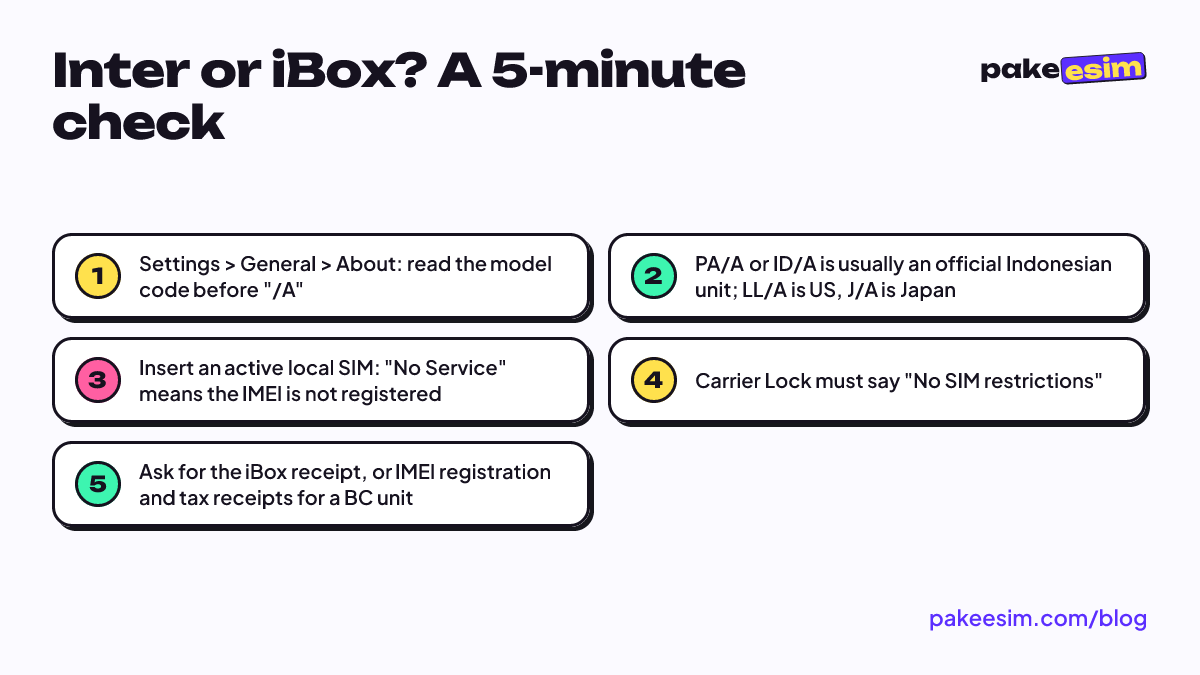
The fastest check needs no extra apps. Run these five checks before you pay.
- Model code. Open Settings > General > About and tap the model number row until a code ending in "/A" appears. Official Indonesian units usually show PA/A or ID/A. LL/A means United States, J/A Japan, ZA/A Hong Kong or Macau, CH/A mainland China.
- IMEI status. Insert an active local SIM. If the card gets signal in another phone but this iPhone shows "No Service", the IMEI is most likely not registered.
- Carrier lock. In the same About menu, find the Carrier Lock row. Per Apple's guide on carrier-locked iPhones, "No SIM restrictions" means the iPhone is not locked to its original carrier.
- eSIM support. Dial
*#06#in the Phone app. If an EID shows up, the iPhone has eSIM. - Documents. An iBox unit has a receipt and an official warranty. A BC unit has IMEI registration proof and a tax payment receipt.
A model code only tells you the original market, not the IMEI status. Even a PA/A unit should be tested with a local SIM, because signal depends on the IMEI database. Card formats per model code are covered in iPhone SIM card not working in Indonesia.
Inter or iBox: which one fits you?
Neither is better across the board, because the hardware is the same. The real difference is how much hassle you are willing to handle yourself. iBox is the calmest option, inter BC sits in the middle, and an unregistered inter is the cheapest with the most homework.
| Your situation | Sensible pick |
|---|---|
| You need a local number, an official warranty, and no fuss | iBox or another official reseller |
| You want to save but still use a local SIM | iPhone inter with Bea Cukai registration proof |
| You are bringing your own iPhone from abroad | Inter, then register the IMEI on arrival |
| You live on home or campus Wi-Fi most of the day | An unregistered inter can still be an option |
| You often take photos in quiet places | Avoid units with a forced shutter sound |
On warranty, Apple's limited warranty document says Apple may restrict iPhone warranty service to the country where Apple or its authorized distributors first sold the device. A broken inter unit in Indonesia may not be covered, so set aside your own repair budget.
Many "inter or iBox" recommendations skip the real price. Add the IMEI registration tax or the cost of alternative internet to the inter price, then compare with iBox again. The full math on the price gap is in iPhone inter vs iBox: which is better, and the long-term risks are in do I need to register IMEI in Indonesia.
Can you use an eSIM on an iPhone inter with an unregistered IMEI?
Yes, as long as it is a roaming eSIM, not a local carrier eSIM. A Telkomsel, Indosat, or XL eSIM still needs a registered IMEI, just like their physical cards. A roaming eSIM uses a foreign carrier profile, and international roaming users are exempt from IMEI verification.
That exemption is in Article 3(5) of Minister of Communication and Informatics Regulation No. 1 of 2020 on device control by IMEI (Komdigi is Indonesia's communications ministry). Your iPhone's IMEI status does not change; you simply keep getting online with a roaming eSIM until you register. The limits are clear. A Pakeesim roaming eSIM is data only, with no phone number, no SMS or regular calls, and no top-ups. WhatsApp and app-based calls still work.
The phone has three requirements. The iPhone must support eSIM, show "No SIM restrictions", and not be one of the dual nano-SIM CH/A or ZA/A units. Check first on the phone compatibility page.
On data, most iPhone inter owners use Wi-Fi at home or in a boarding house, so mobile data is only for when they are out. As a rough guide, 1 GB covers about a day of Maps, chat, and moderate social media. For two weeks of light use, 2 GB is usually fine. Live prices as of October 2026:
| Plan | Data | Validity | Price | Per day |
|---|---|---|---|---|
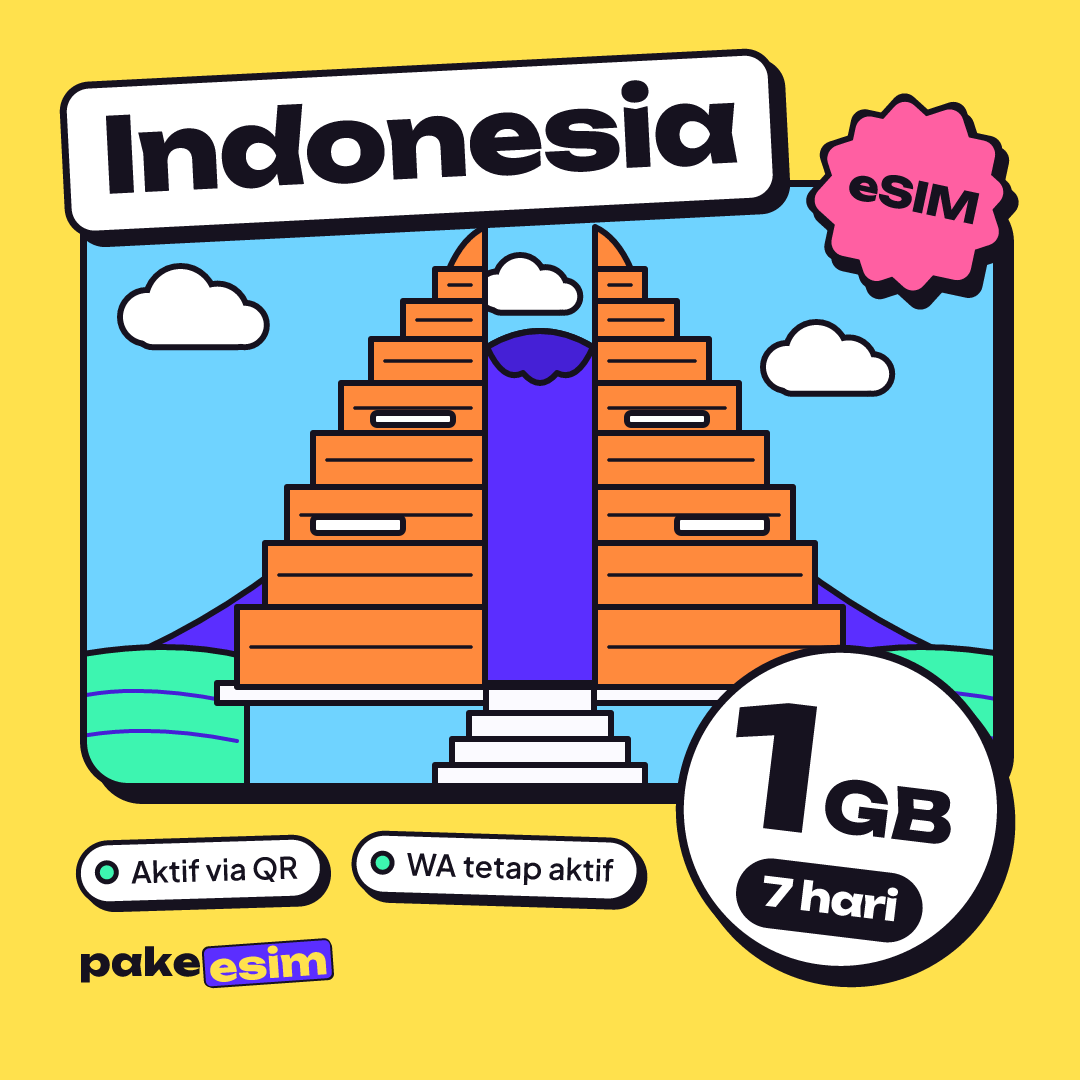
| eSIM Indonesia 1 GB / 7 Days | 1 GB | 7 days | Rp8.900 | ±Rp1.271 |
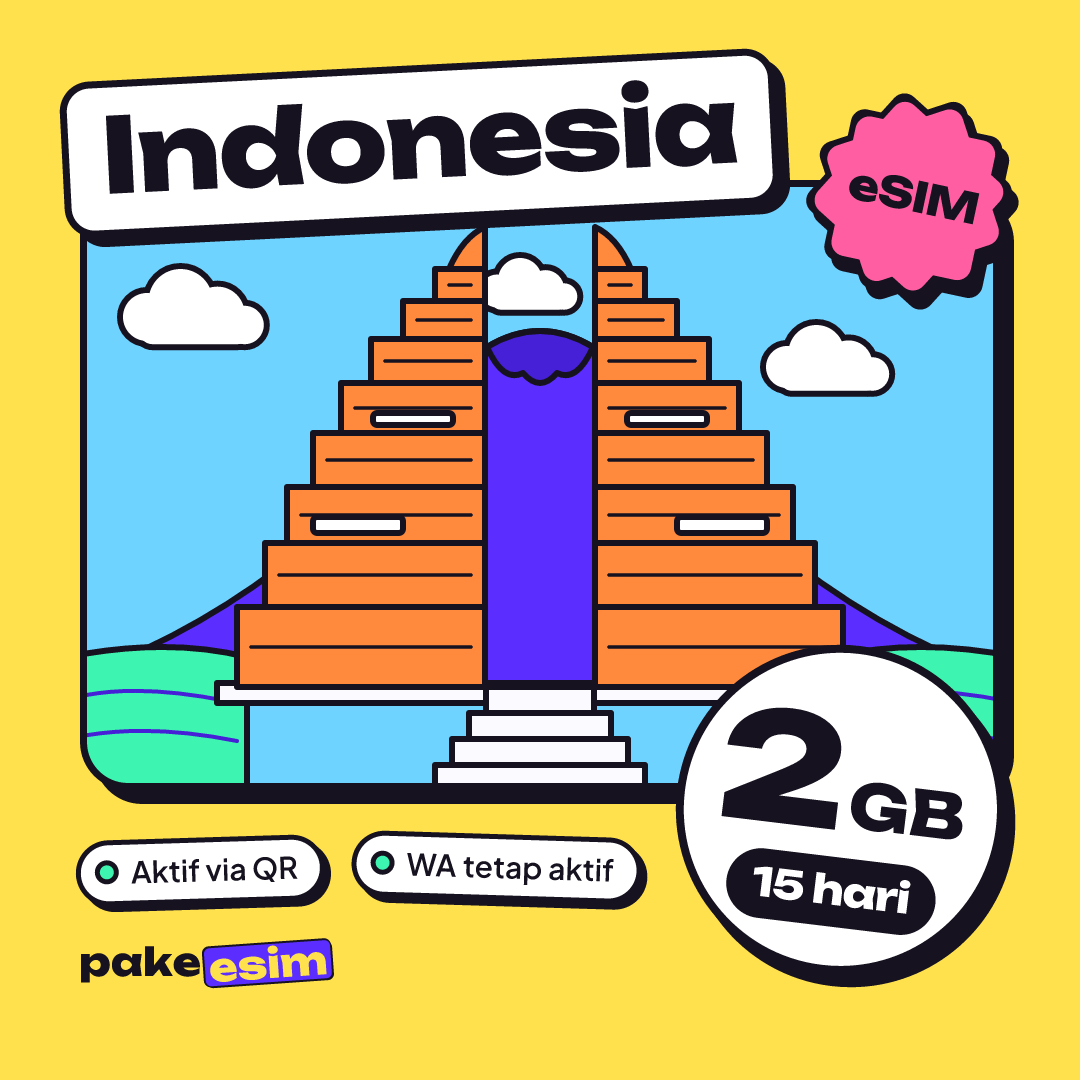
| eSIM Indonesia 2 GB / 15 Days | 2 GB | 15 days | Rp17.900 | ±Rp1.193 |
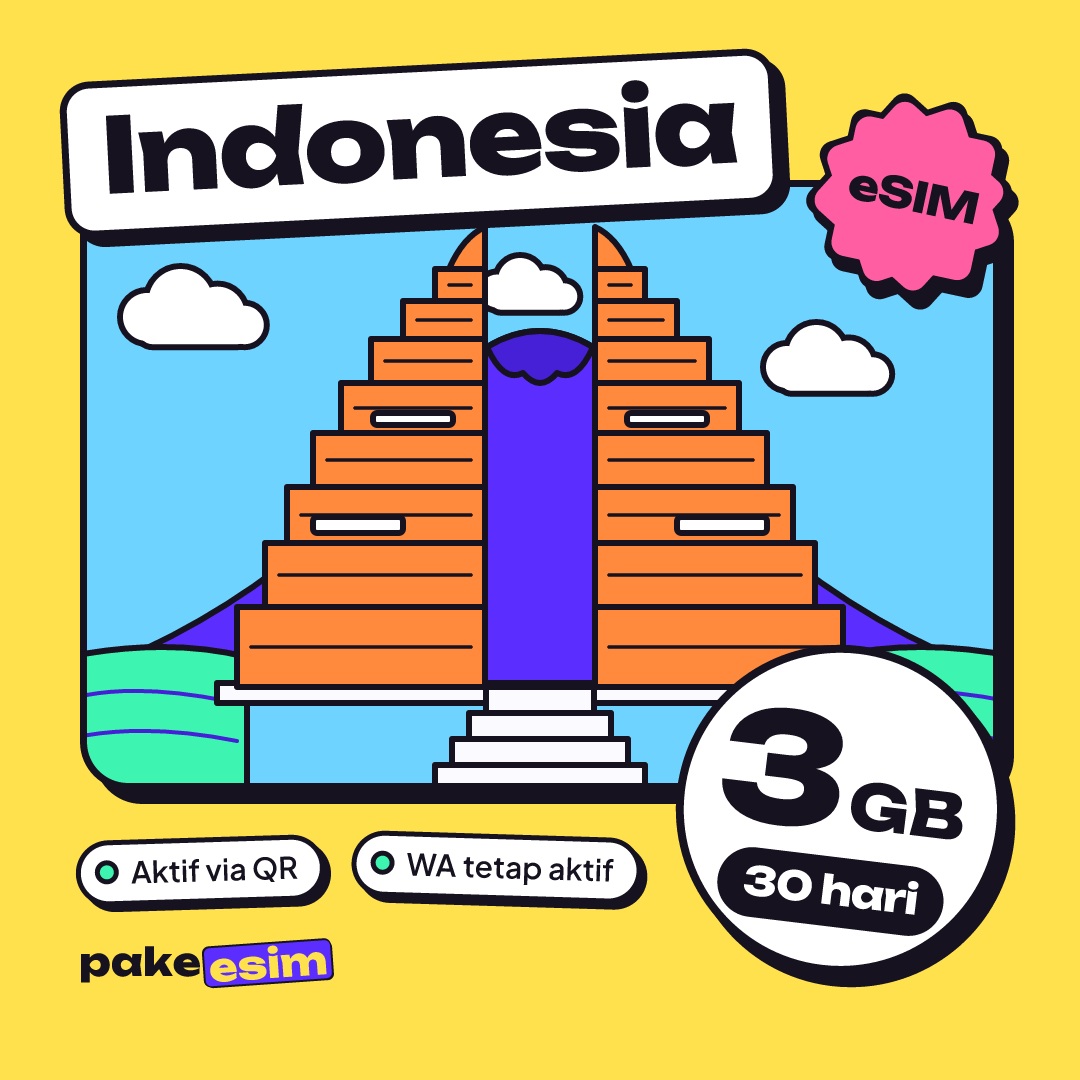
| eSIM Indonesia 3 GB / 30 Days | 3 GB | 30 days | Rp25.900 | ±Rp863 |
| eSIM Indonesia 4 GB / 30 Days | 4 GB | 30 days | Rp34.900 | ±Rp1.163 |
For two weeks of use while you decide whether to register the IMEI, this plan is a good starting point:
A comparison of local eSIM, roaming eSIM, and IMEI registration is in best eSIM for an iPhone in Indonesia. Once your QR code arrives, follow the eSIM installation guide and turn on Data Roaming for the eSIM line. One honest note for foreign buyers: payment is online in rupiah through Indonesian methods like bank virtual accounts, QRIS, e-wallets, and cards, explained on the how to pay page.
Before you pick inter or iBox
The "which is better" question is rarely about the iPhone itself. What you are really choosing is a bundle of chores. iBox means paying up front and being done. Inter BC means paying the tax once and giving up the local warranty. An unregistered inter means the lowest price, with Wi-Fi or a roaming eSIM as your way online.
Check the model code, test a local SIM, look at the carrier lock status, and ask for documents before you transfer money to a seller. If the iPhone inter is already in your hands and local signal still won't show up, check eSIM compatibility first, then pick a data plan that matches your habits.